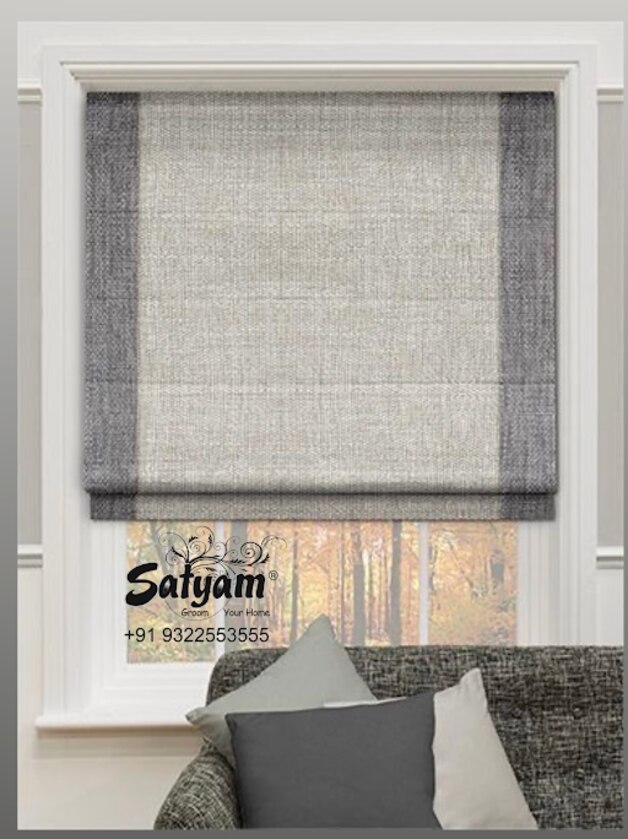
A Roman blind looks streamlined only when its stack, mounting position, fabric weight, and operating hardware suit the window. By checking those details before ordering, you can preserve usable glass, avoid bulky folds, control glare and privacy, and choose a treatment that works with the room rather than competing with it.
Key takeaways
- Choose flat folds for the quietest modern window appearance.
- Check the raised blind’s folded stack before fixing the mounting position.
- Match fabric weight and lining to light control and room use.
- Measure clearances around handles, radiators, furniture, and window recesses.
Choose a Fold Style That Keeps the Window Visually Quiet
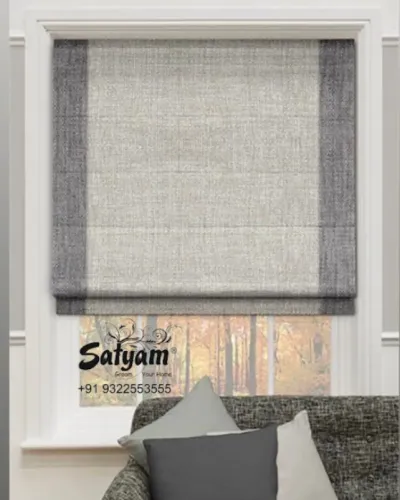
Flat-fold Roman blinds create the cleanest modern appearance because their front fabric stays relatively smooth when lowered. When raised, they gather into orderly, horizontal folds that stack evenly at the top rather than forming soft waves or layered scallops.
| Style | Lowered appearance | Raised appearance | Visual effect |
|---|---|---|---|
| Flat-fold Roman blinds | Smooth, structured face | Even horizontal folds in a compact stack | Crisp and visually quiet |
| Cascade Roman blinds | Overlapping horizontal folds | Layered folds remain visibly stepped | Decorative and more dimensional |
| Relaxed Roman blinds | Soft, curved lower edge | Loose folds gather with a gentle sag | Casual and less architectural |
| Hobbled Roman blinds | Deep folds or loops across the face | Bulky, pronounced layers stack upward | Traditional and highly textured |
A flat-fold blind still covers part of the upper glass when raised; the amount depends on the blind’s drop, fold depth, and construction. Ask for the manufacturer’s finished stack height before choosing it for a shallow recess or a view that must remain clear.
Choose a plain or finely textured fabric to preserve the controlled geometry. A cordless or motorised flat-fold blind also removes dangling cords, supporting both the uncluttered appearance and safer operation around children and pets.
Plan the Mounting Position and Folded Stack Before Measuring
An inside mount keeps the Roman blind within the recess, while an outside mount can make the window look taller and wider by extending beyond the frame. The position also determines how much glass remains visible when the blind is raised.
| Mounting option | Effect on proportions and usable glass | Finished appearance |
|---|---|---|
| Inside mount | Preserves surrounding wall and trim, but the folded fabric can cover the upper glass | Neat and integrated; light may enter through side gaps |
| Outside mount | Covers part of the wall or frame, increasing apparent window size and reducing perimeter leakage | Stronger, more continuous treatment |
| Recessed fitting | Places the blind inside a deep recess; available depth must accommodate the headrail and folds | Discreet, provided handles and sashes remain clear |
1. Measure the recess depth and the space above the opening. Compare this with the manufacturer’s Roman blind stack height; a shallow recess can leave the raised blind covering too much glass.
2. Mark the highest point of the folded stack, not only the headrail. If the window is valued for an unobstructed view, choose an outside mount or a blind with a smaller published stack height.
3. Record every obstruction, including handles, crank mechanisms, insect screens, and inward-opening sashes. A blind mounted too close can strike hardware or prevent the window from opening.
4. Check the finished width and drop from inside the room. Keep an outside mount balanced with the wall and trim, rather than extending so far that it overwhelms a narrow opening.
Match Fabric Weight, Pattern Scale, and Lining to the Room
Choose a medium-weight, tightly woven face fabric for a crisp Roman blind. Very light cloth can look limp, while heavy upholstery fabric creates thick folds, a deeper folded stack, and extra strain on the operating mechanism. Request a sample folded to the proposed fold depth, not only a loose swatch.
| Fabrication | Daylight and privacy | Suitable lining | Main caution |
|---|---|---|---|
| Translucent | Filters daylight and obscures views, but can show silhouettes after dark | Unlined or light-filtering lining | It will not create a dark room |
| Dimout fabrications | Reduces glare and preserves some daytime brightness | Dimout lining | Check the sample at night for privacy |
| Blackout | Gives the strongest room-darkening effect | Blackout lining | Light can still enter through side, top, and bottom gaps |
Specify opacity separately from colour and pattern. A blackout lining can make the blind look heavier, so use the lightest lining that meets the room’s need; adding layers without checking the Roman blind fabric weight can produce bulky folds.
Keep the face fabric plain, lightly textured, or small-scale for the most controlled modern appearance. Large motifs, stripes, and checks cross the fold lines, interrupting the design and sometimes requiring pattern matching, extra fabric, and higher fabrication effort. If you choose a bold pattern, fold a full sample before approving it.
Use the lining to support the face fabric rather than overpower it. An outside fit or close perimeter fit also limits edge leakage more effectively than an inside-mounted blind with generous gaps.
Measure for Safe, Unobstructed Operation
Measure beyond the glass: Roman blind measurements must include the finished width and drop, hardware projection, ventilation clearance, and the folded stack height.
- Record the recess width at the top, middle, and bottom, plus the drop on both sides. Use the smallest width so the blind does not bind.
- Measure the projection of handles, cranks, insect screens, and inward-opening sashes. Leave clearance for the headrail and moving folds, or the fabric can strike hardware and block ventilation.
- Confirm the available space above the glass for the raised stack. A low stack reduces covered glass; an insufficient one leaves the blind obstructing the view.
- Check the span and fabric weight before specifying one continuous blind. Divide a very wide or tall opening into coordinated panels when one blind would sag or strain its mechanism, accepting a narrow vertical gap between panels.
Cord safety matters wherever children or pets use the room. Choose cordless operation, or secure a chain mechanism with its tension device so the loop cannot hang freely; a loose operating cord creates a strangulation hazard.
Motorised Roman blinds remove hanging cords and make large blinds easier to raise evenly. Add a battery or wired control plan before installation, since later access to the motor can require removing the blind. For top-down/bottom-up operation, measure both moving sections and expect extra hardware, maintenance, and folded fabric at the top.
Test the Design Against Difficult Windows and Real Room Use
A window that moves, opens inward, or stays exposed to steam needs a layout test before fabric is ordered. Roman blinds for sliding doors usually work as separate panels aligned with each moving leaf, while a single wide blind can obstruct access and become difficult to lift.
- French doors need individual blinds or a split layout so each door opens without dragging the fabric or striking the handle.
- Bay windows require a check of the angles, corner gaps, and separate headrails; one continuous blind rarely follows the bay cleanly.
- Opening sashes need clearance for the handle, crank, insect screen, and inward swing. Record their projection, not just the glass size.
- Damp bathrooms, sink-side kitchens, and poorly ventilated rooms can stain, mildew, or distort untreated fabric. Choose a moisture-tolerant alternative or relocate the blind.
- Wide openings need a mechanism and support system suited to the fabric weight. Divide the blind into coordinated panels when one span would sag, accepting the narrow vertical gaps.
- Use top-down bottom-up Roman blinds when you need daylight above and privacy below, but allow for extra hardware, maintenance, and a larger folded stack.
A professional site check is worthwhile when several obstructions meet, the opening is unusually wide or tall, or the blind must preserve a precise view. SATYAM FURNISHING 9322553555 can assess clearances, panel divisions, and stack space on site before the final layout is chosen.
Related product
 | Roman Blinds ₹225 from Satyam Furnishing in Thane offer an elegant and modern window-treatment solution for any home. View product → |
Frequently asked questions
Which Roman blind fold style looks cleanest on a modern window?
Flat-fold Roman blinds keep the fabric relatively smooth when lowered and form orderly horizontal folds when raised.
Where should you mount a Roman blind?
Plan the mounting position alongside the raised blind’s folded stack, checking that it will not block the glass, handles, or nearby trim.
How should you choose Roman blind fabric and lining?
Match fabric weight, pattern scale, and lining to the room’s light-control needs, window size, and overall décor.
What should you check before ordering a Roman blind?
Measure for unobstructed operation, then test the design against handles, radiators, furniture, deep recesses, and everyday use.