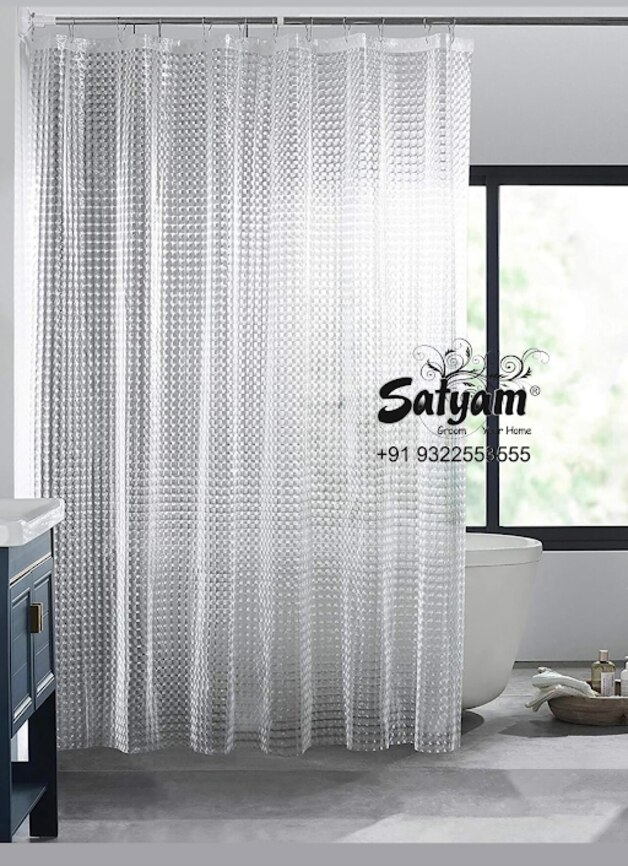
A shower curtain can fail because it is the wrong width, ends at the wrong height, billows into the shower or stays wet between uses. By checking the opening, layout, material, hardware and drying conditions, you can choose a setup that fits your bathroom and remains easier to clean.
Key takeaways
- Measure the rod or track, then add overlap for the curtain width.
- Choose a washable polyester curtain with a separate liner for easier maintenance.
- Check rod length, ring size and curtain drop before buying.
- Dry the curtain fully after each shower to reduce mould and odours.
How do you measure for the correct shower curtain size?
Measure the rod or track and the required drop; the bathroom’s total floor area does not determine shower curtain size. The shower curtain width and length must match the shower opening, hardware and finishing point.
1. Measure the actual rod or track from end to end. Add enough width for the curtain to extend beyond both sides of the opening and overlap at the centre, preventing spray from escaping through side or centre gaps.
2. Choose the width according to the material. A fabric curtain needs roughly 1.5 times the track length so it can form folds and still close with centre overlap. A flat vinyl panel needs less fullness, but it must still cover the complete opening when closed.
3. Measure the drop from the underside of the installed rod or track to the intended finishing point. In a shower-tub setup, finish near the tub surface without letting the curtain pool; in a walk-in shower, finish above the floor and keep clear of the drain area.
A curtain that drags or sits in a wet puddle dries slowly, while one that ends too high lets water escape.
4. Treat the common 180 × 180 cm shower curtain size as a starting point, not a guarantee. Compare it with your measured opening, required overlap and drop; a wide tub, curved rod or ceiling track can require a wider or longer panel.
For how to measure shower curtain dimensions accurately, measure after the rod or track is installed, not from a sketch or the room’s wall length.
Which curtain dimensions suit compact, wide and unusual bathrooms?
Match the curtain plan to the shower layout after taking measurements. In a compact bathroom, use only enough width to overlap the opening and control spray; excessive fullness creates bulky folds that project into a narrow walkway and make the room feel tighter.
| Layout | Dimension plan | Main check |
|---|---|---|
| Compact shower | Opening width plus modest overlap; drop to just above the floor or tray | Keep folds from blocking the walkway |
| Wide tub or opening | Enough width for centre overlap and full-span folds | Prevent side gaps when the curtain is closed |
| Shower-tub setup | Follow the tub edge; finish near the tub surface | Leave clearance so the shower-tub curtain does not pool |
| Walk-in shower | Set the walk-in shower curtain length and width from the entry opening and drainage | Keep the lower edge inside the wet zone without obstructing drainage |
A wide shower opening needs more than a standard rectangle if the rod spans a long tub or enclosure. Add sufficient fabric for folds and overlap at the centre, or spray will escape through the closing gap.
Corner showers need measurements for each side, not one wall-to-wall estimate. A curved rod also requires the complete curved track length, while a ceiling track requires the drop from the track to its finishing point.
With a sloped ceiling, identify the lowest point before choosing the drop; a standard rectangle can leave a high-side gap or drag at the low side. Use separate panels, a tailored cut, or a track-mounted solution when the shape cannot close cleanly.
Which shower curtain material and liner combination is easiest to live with?
A polyester shower curtain is the easiest single-fabric choice for many bathrooms: it is light, quick-drying and washable, but ordinary woven polyester is not automatically waterproof.
Cotton and linen look richer, yet absorb more water and stay damp longer, so use a cotton shower curtain as an outer layer unless it is specifically finished for shower use.
| Option | Water resistance and drying | Weight, privacy and maintenance | Main trade-off |
|---|---|---|---|
| Polyester | Moderate; quick-drying | Light, private and washable | Needs a coating or liner if water passes through |
| Cotton or cotton blend | Absorbent; slower-drying | Heavier, highly private and launderable | Higher mould risk when left damp |
| PEVA | Non-absorbent; dries quickly | Light, private and wipe-clean | “Chlorine-free” does not prove zero odour or emissions |
| PVC | Non-absorbent; dries quickly | Private and wipe-clean | Can smell, crease permanently, crack and become brittle |
A PVC shower liner material comparison should not treat PEVA and PVC as identical. PEVA is marketed as chlorine-free, while PVC is chlorine-containing; either plastic can have odour or additives, and plastic creates a longer-lived disposal problem than a washable textile.
Use a separate liner when water control matters: place a replaceable or washable PEVA, PVC or fabric liner inside, with a decorative outer curtain outside. This makes laundering, replacement and style changes easier. Fabric liners wash better; plastic liners wipe clean faster but can develop persistent odour.
Choose thickness for stability and privacy, then add magnets or a weighted hem to limit billowing. These features cannot fix incorrect sizing, side gaps or inadequate centre overlap.
How do you check hardware compatibility and prevent common fitting failures?
Check shower curtain rod compatibility before buying the curtain, not after opening the package. Confirm the rod diameter, track path, number and spacing of attachment holes, and whether hooks, rings or eyelets fit without snagging.
- Measure door, cabinet and wall clearance so the curtain can slide fully aside.
- Check that the rod or track reaches both ends of the shower area, including any side return.
- Inspect hooks and rings for rust; corroded metal stains fabric and makes sliding rough. Plastic or corrosion-resistant hardware reduces maintenance.
- Test magnets against the tub or shower base, and check that a weighted shower curtain liner has a hem that will not catch on fittings.
- Confirm the liner will not collide with a door, cabinet or inward-opening shower screen.
| Failure | Likely cause | Correction |
|---|---|---|
| Spray escapes below | Curtain is too short | Measure from the rod or track to the intended finishing point |
| Centre or side gap | Insufficient width or overlap | Add width and overlap at the closure |
| Curtain billowing inward | Light liner or poor airflow | Use a heavier liner, magnets or weights |
| Liner moves from the tub | No weighted hem | Choose a weighted shower curtain liner |
| Corner leakage | Rod, liner or side return is too short | Extend the rod, liner or return |
Magnets and weights reduce movement; they cannot make a badly sized curtain watertight. For an unusual opening or replacement rod, SATYAM FURNISHING 9322553555 in Thane can compare your measured opening with compatible curtain and rod options.
Related product
 | Shower Curtains ₹350 Shower curtains are an essential part of any bathroom, serving both functional and decorative purposes. View product → |
What cleaning and ventilation routine keeps a shower curtain usable?
The most effective shower curtain cleaning habit is drying it completely. Spread the curtain fully after every shower instead of leaving it bunched up wetly, where folds trap moisture and encourage mould.
- Run an exhaust fan during bathing and afterward. Confirm that it vents outdoors; a fan that only recirculates air inside the bathroom does not remove moisture from the building. Open a window when weather and privacy allow.
- Keep indoor relative humidity below 60%; the EPA’s ideal range is 30% to 50% for limiting mould growth. Fix plumbing leaks promptly and remove standing water from the tub, floor or curtain hem.
- Wash a polyester or fabric curtain when it has soap film, soil, odour or staining, following the sewn-in care label. Coatings, printed surfaces, magnets, metal eyelets and weighted hems change the laundering method and temperature.
- For how to clean PEVA and PVC liner surfaces, use only the product-approved cleaner and a soft cloth or sponge. Abrasive products, unsuitable solvents and high heat can scratch, soften or warp plastic and damage coatings.
- Treat mould or stains with the labelled product, adequate ventilation and the protective equipment named on its label. Never mix chlorine bleach with ammonia, acids or any other household cleaner; dangerous gases can form.
This bathroom ventilation and mould prevention routine matters more than a “mildew-resistant” label. If persistent odour, cracking or mould remains after cleaning, replace the curtain or liner.
Frequently asked questions
How do you measure for the correct shower curtain size?
Measure the rod or track length for width and the distance from the rod to the desired finishing point for drop. Add side overlap so the curtain closes without gaps.
Which curtain dimensions suit compact, wide and unusual bathrooms?
Use a standard curtain for a compact opening, a wider curtain or two panels for broad openings, and measure custom widths and drops for angled, curved or unusually high spaces.
Which shower curtain material and liner combination is easiest to live with?
A washable polyester curtain paired with a separate waterproof liner offers simple cleaning, controlled water splash and easier replacement than a single heavy curtain.
How do you check hardware compatibility and prevent common fitting failures?
Confirm the rod or track length, ring or hook opening, eyelet spacing and curtain drop. Check that the hardware supports the curtain weight and that the hem clears the floor.
What cleaning and ventilation routine keeps a shower curtain usable?
Spread the curtain after showering, run the exhaust fan, keep the bathroom ventilated and wash the curtain according to its care label. Remove soap residue before it hardens.