A curtain can hide a patient from adjacent beds and passing staff without isolating the space from sound, observation or emergency access. By the end, you will know how to specify coverage, choose a track layout and compare curtains with solid or fixed alternatives without sacrificing care-team movement.
Key takeaways
- Use curtains to block sightlines during examinations, procedures and personal care.
- Specify width, drop and overlap together to close visual gaps between panels.
- Keep tracks clear of staff routes, equipment zones and emergency access paths.
- Test every curtain for coverage, smooth movement and secure track installation.
Where Hospital Curtains Create Separation in Patient Care Areas
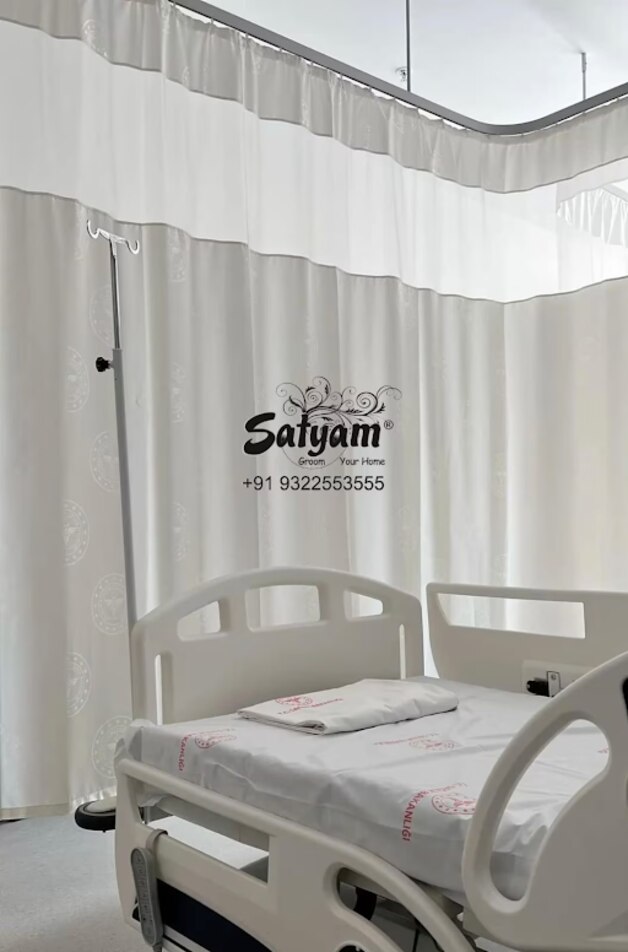
A privacy curtain separates patients by removing the direct line of sight between a bed or treatment space and nearby people. Staff can draw it around the patient during an examination, dressing change, procedure, or personal-care task, creating a defined visual boundary without building a permanent room.
Hospital curtains support patient privacy in several patient care areas:
- Multi-bed rooms, where a closed curtain screens one patient from neighbouring beds.
- Emergency bays, where it gives a patient visual separation while clinicians work nearby.
- Examination spaces and recovery bays, where it shields changing, assessment, and post-procedure care.
- Infusion areas, where it separates chairs without preventing staff from reaching the patient quickly.
The separation is visual, not acoustic. Conversations, alarms, equipment noise, and instructions still pass through or around the fabric, so a curtain cannot replace a quiet room, solid door, or sound-control treatment.
The curtain also does not remove the need for observation. Staff may need a nurse-call system, observation panel, or planned sightline to monitor the patient while the curtain is closed. Track position, corner coverage, curtain overlap, bed placement, and open gaps determine whether the screen actually blocks views from adjacent beds and walkways.
During transfers, cleaning, examination, or an emergency, staff must open or move the curtain quickly. It is a temporary separation that protects dignity while care continues, not a fixed barrier.
How Width, Drop and Overlap Determine Visual Privacy
A closed curtain prevents sightlines only when its fabric covers the entire viewing angle around the bed or treatment space. Measure from every likely observer position, including adjacent beds, staff walkways and doorways; a gap at a track end or corner can expose the patient even when the panel looks fully drawn.
Specify the privacy curtain width for the complete track route, not just the bed length. Add enough fabric to travel around corners, cover returns and meet the opposing panel without pulling the curtain tight. A narrow panel leaves a triangular opening at the corner.
The curtain drop is the finished distance from the carrier or track to the lower edge. State the required drop and finished floor clearance together: a high hem exposes the lower body, while fabric dragging on the floor collects soil and obstructs movement. Check the drop after laundering because shrinkage can create a new sightline.
- Measure curtain overlap at every meeting point. Require the panels to cross far enough that standing observers cannot see through a diagonal gap.
- Check the mounting height for hospital curtains against the bed, trolley and observer eye level. A track mounted too high can leave an exposed band beneath an upper mesh section or above a short panel.
- View the closed curtain from seated and standing positions, including through the gap between bed rails.
- Test the fabric with room lights on and behind the patient; a textile that appears opaque in front lighting can become transparent when backlit.
Choosing a Track Layout Without Blocking Care or Emergency Access
A ceiling-mounted hospital curtains system with a cubicle track usually gives the best balance: it leaves walls and floor clear while the curtain screens the bed, yet staff can pull it aside quickly for examination, transfer or resuscitation.
Keep the rail outside the bed’s turning area and away from doorways, oxygen outlets, evacuation routes and the path used by stretchers.
| Option | What it does | When it applies |
|---|---|---|
| Straight track layout | Screens one side of a bed or chair and opens directly into the circulation space | Narrow bays where staff need the shortest opening movement |
| L-shaped track | Covers two adjoining sides while leaving one side open for entry and equipment | Corner beds and examination spaces |
| U-shaped track | Screens three sides and creates stronger visual enclosure | Shared rooms or treatment bays with a defined entry side |
| Curved track | Follows a rounded or irregular room edge without sharp corners | Recovery bays, curved walls and spaces needing smoother curtain movement |
A wall-mounted curtain track suits rooms where the ceiling cannot carry a rail, but its brackets and curtain stack can narrow the working zone. Check the fully opened curtain against the bed, infusion pole, mobile lift and emergency trolley; a privacy solution fails if the gathered fabric blocks access.
Leave a clear opening for bed transfers, and make sure the curtain can be pulled from either side. Confirm that corner returns, overlaps and end gaps do not create a sightline into the patient space when the curtain is closed.
How Curtains Compare With Screens, Glass, Blinds and Permanent Walls
A curtain is better when visual separation must move with care: it screens a bed, infusion chair, or examination bay quickly, then clears the route for a stretcher or emergency team. It is weaker than any solid barrier for acoustic privacy because conversations, alarms, and movement remain audible.
| Option | Separation strength | Best use and limitation |
|---|---|---|
| Hospital curtain | Visual privacy with rapid opening; little sound control | Shared rooms and recovery bays where staff need flexible access; it does not provide a sealed room or control observation by itself |
| Solid privacy screens | Stronger visual and modest sound blocking | A fixed bedside boundary; they occupy floor space and can slow transfers or equipment movement |
| Folding screens | Adjustable visual separation without a track | Temporary zoning or overflow areas; hinges, gaps, and repositioning reduce consistency and cleaning ease |
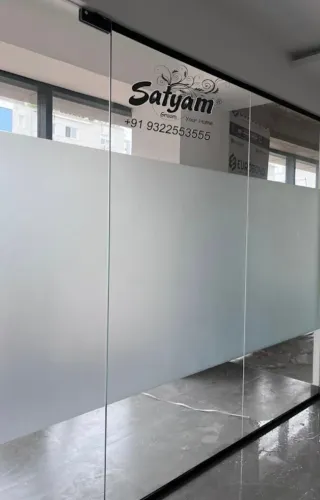
| Glass partitions in healthcare facilities | Clear, durable division with controlled sightlines | Consultation or treatment zones needing light and observation; ordinary glass gives poor privacy unless frosted, patterned, or fitted with an obscuring treatment |
| Blind | Controls a narrow sightline, not the whole bay | Windows or observation panels; it cannot screen a bed from nearby staff or patients |
| Permanent wall | Highest visual and acoustic separation | Dedicated rooms and infection-control zoning; it costs space, limits flexibility, and cannot open for rapid access |
Choose a curtain when turnover, cleaning access, and unobstructed movement matter more than sound isolation. Choose a solid screen or permanent wall when confidential discussion or sustained separation is central. A curtain also needs deliberate sightlines: staff may require observation panels or nurse-call systems, because closing fabric does not preserve monitoring.
Testing the Installation Before You Specify or Replace It
Approve the system only after a full-scale mock-up proves privacy, cleanability, fire performance and unobstructed care. Test it in a representative bay with the bed, examination chair, lifting equipment and emergency route in place, then record the results against the specification.
1. Close the curtain and inspect it from the bed, adjacent bay and staff corridor. Record the finished drop, floor clearance, track coverage, overlap and curtain opacity when backlit. Note any view through seams, gaps or raised fabric.
2. Open and close every section repeatedly with one hand. Time the movement, check for snagging, and confirm that staff can reach the patient, move a stretcher and remove equipment without dismantling the track. Test the emergency route with the curtain fully open and closed.
3. Remove and refit the replaceable curtain panels. Document the fasteners, panel identification, laundering method, permitted water temperature, shrinkage tolerance, seam strength and grommet durability. Add the panels to the facility’s curtain cleaning program, including action for visible soiling and contamination; manufacturer instructions and a local risk assessment set the interval.
4. Specify fire-resistant cubicle curtains with the fire classification or test evidence accepted by your jurisdiction and building code. Keep that document with the purchase record rather than relying on the supplier’s “fire safe” wording.
5. Ask for a fabric sample and full-scale track sample before approval. SATYAM FURNISHING 9322553555 can help a Thane facility compare panel construction and track operation against its room layout, but the facility must retain its own test records. Antimicrobial claims do not replace hand hygiene, cleaning or scheduled replacement.
Related products
 | Hospital Curtains ₹998 play a vital role in creating a clean, safe, and comfortable environment within healthcare facilities. View product → |
 | ₹250 Hospital curtain tracks are an essential component of modern healthcare infrastructure, ensuring patient privacy, proper space management, and smooth... View product → |
Frequently asked questions
Where do hospital curtains create separation in patient care areas?
They separate beds, examination spaces and treatment areas during examinations, dressing changes, procedures and personal-care tasks.
How do curtain width, drop and overlap affect visual privacy?
Width closes the space around the bed, drop controls the lower sightline, and overlap prevents gaps between curtain panels.
How should you choose a hospital curtain track layout?
Choose a layout that follows the required privacy boundary while keeping staff routes, equipment movement and emergency access unobstructed.
How do hospital curtains compare with screens, glass, blinds and permanent walls?
Curtains provide flexible visual separation, while screens, glass, blinds and permanent walls differ in stability, visibility, cleaning demands and space requirements.
How do you test a hospital curtain installation before replacing or specifying it?
Draw each curtain fully, inspect sightlines and gaps, check panel overlap, move the carriers along the track, and confirm that care and emergency routes remain clear.